
Personal AI agents: choose the control boundary
A personal AI agent is software that can pursue a defined task, use approved tools, retain selected context, and return a result. The useful buying question is not “Which app is smartest?” It is “What may this system read, change, remember, and do without asking me?” Start with one narrow task. Keep sensitive data and credentials within a boundary you can describe. Require approval before an external action. Pick hosted, local, or hybrid deployment only after mapping every model, memory store, tool, and provider involved. No option creates absolute privacy or dependable autonomy by itself. A personal agent should fail into a visible stopped state, not continue on guesswork.
Are there AI agents for personal use?
Zapier’s current personal-assistant guide covers general chat tools, calendar products, research tools, and agentic workflows in one list. Zapier says the strongest options can act across platforms and learn preferences, but it also warns that action-taking systems need deliberate access choices (Zapier). Vellum draws a stricter line for developers: it says a personal assistant should retain context across sessions and take actions in connected tools, while a local model interface may remain only a building block (Vellum).
This market language is why buyers should ignore the label for a moment. Ask what the product can actually do in your account:
- Can it only answer, summarize, or draft?
- Can it read a calendar, folder, inbox, or task system?
- Can it create or change a record through a tool?
- Does it keep memory after the session ends?
- Can it start work from a trigger, or only from your prompt?
- Which actions wait for your approval?
A useful personal agent does not need broad access. As a scope example, an agent prepares a client deliverable from one approved client workspace. It cannot cross into another client's records and stops before sending the deliverable or changing the CRM. Scope is a control, not a lack of ambition. NIST describes its AI Risk Management Framework as a voluntary way to bring trustworthiness considerations into the design, use, and evaluation of AI systems (NIST).
What makes an assistant an agent?
An assistant becomes agent-like when it can move from producing an answer to pursuing a task through tools.
That difference is about authority. A chat assistant can suggest an email. An agent with an email tool may create a draft or send it, depending on the permission granted. A research assistant can return sources. An agent with task access may also create follow-up items. Each added tool widens what a mistaken instruction or bad output can affect.
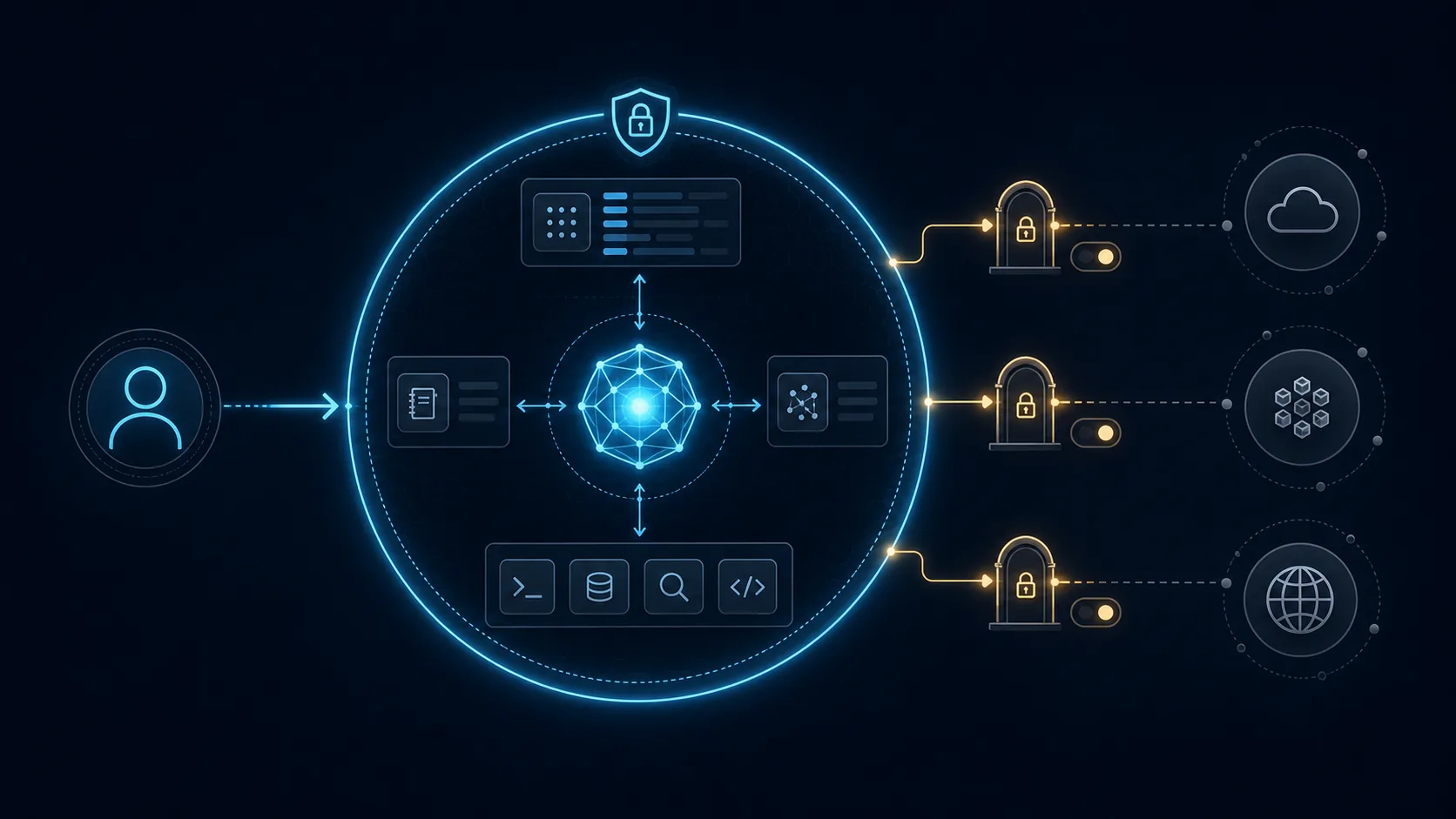
Use five parts to inspect any personal agent offer:
- User: The person who sets the goal and owns the final decision.
- Agent: The instructions and task state that decide the next allowed step.
- Tools: The named actions that can read or change another system.
- Memory: The context retained for the current task or a later session.
- Approval boundary: The point where work must stop until the user accepts an external action.
This is an architecture test, not a product category. Zapier says its own platform can combine fixed workflows with AI judgment and can send a drafted reply for review rather than sending it immediately (Zapier). Vellum says its product offers persistent memory and action-taking, with local and hosted deployment choices (Vellum). These are vendor descriptions. Verify the exact plan, connector, and permission screen before purchase.
Which data and permissions should stay under the user's control?
Keep the decision about access under the user’s control, even when the underlying service is hosted. That means the user should be able to identify the data source, approve the allowed action, remove access, and decide what memory is retained. The private AI guide explains why a deployment label is incomplete without a map of records, operators, providers, and external connections.
Permission checklist
- [ ] List each source the agent may read.
- [ ] Separate read access from create, edit, send, and delete access.
- [ ] Keep credentials out of prompts and ordinary memory records. Vellum says its own credential service isolates credentials from its model process (Vellum).
- [ ] Identify which provider receives each prompt, file, or tool request, as mapped in the private AI guide.
- [ ] Decide which context expires with the task and which memory may persist.
- [ ] Require user approval before messages, purchases, bookings, or record changes. Zapier gives draft-for-review as one workflow pattern (Zapier).
- [ ] Confirm how access is revoked and how stored data is deleted.
- [ ] Confirm where the user can inspect completed and failed actions.
Do not treat a local model as automatically secure. The live local AI agents guide notes that a local process may still call an outside model or connected service. It also explains that local deployment moves operational duties to the owner rather than removing them. For a wider review of permissions and accountability, use the security and governance guide.
See the AI Jungle OS cockpit if you want to map a private-box boundary around one personal agent workflow.
Hosted, local or hybrid: what changes?
The deployment choice changes who operates each component and where requests travel. It does not settle privacy on its own. Use the table as a buyer’s interview guide, then verify the real configuration and vendor terms.
| Architecture | What you operate | What to verify before buying | Best fit when | Source precision |
|---|---|---|---|---|
| Hosted | Usually the account settings, connected apps, and user approvals | Data-use controls, retention, memory, connector scope, deletion, and account revocation | You want the provider to operate the application and accept its stated data boundary | Zapier describes hosted assistants and connected workflows (Zapier) |
| Local | The local runtime plus its access, updates, logs, storage, and network settings | Whether model calls, tools, updates, or connectors still leave the device or box | You want selected components on hardware you control and can own the operating work | The local agent guide maps local inference, orchestration, memory, tools, and outside connections separately |
| Hybrid | The components on your hardware and the boundary between them and hosted providers | Which data crosses for model inference or tool use, which copy is stored, and who can revoke each path | You need local control of selected records or orchestration while using a hosted model or service | Vellum says its local installation can keep its runtime local while model API calls may still leave the device (Vellum) |
Hosted can reduce the infrastructure you operate, but it places more of the service boundary with a vendor. Local can give you direct control of selected components, but it gives you more operating duties. Hybrid can split those duties, but every crossing needs to be recorded. These comparisons follow the cited product documentation and the site’s box versus SaaS guide, not a claim that one option is always safer.
Avoid the phrase “my data stays local” unless every relevant path has been checked. A local agent with a cloud model is hybrid for that request. A local model with a web connector sends data outside for that tool call. Exact boundaries beat category labels.
How should a first agent be scoped and stopped?
Start with one task that has an observable result. “Manage my work” is too broad. “Prepare a draft reply from messages in this folder, then wait for approval” names the input, output, tool boundary, and human decision.
Write the first-agent brief in plain language:
- Goal: one result the user can inspect.
- Inputs: named sources the agent may read.
- Tools: the smallest action set needed for the task.
- Memory: what can persist and why it is needed.
- Approval: the external action that waits for the user.
- Done: evidence that the task has completed.
NIST says AI risk management should be considered across design, development, use, and evaluation, rather than treated as a one-time product label (NIST). For a personal agent, that translates into a stop path that works during normal use and when the system is uncertain.
Stop-condition checklist
- [ ] Stop when a required source is missing or unreadable.
- [ ] Stop when the request falls outside the written goal.
- [ ] Stop when the agent asks for an unapproved tool or permission.
- [ ] Stop before an external action that requires user approval.
- [ ] Stop when a tool returns an error or an unexpected result.
- [ ] Stop when the result cannot be checked against the completion rule.
- [ ] Stop when the user pauses the task or revokes access.
- [ ] Preserve the last visible state and show the reason for stopping.
Do not make silence count as approval. Do not let the agent swap tools or data sources to work around a denial. Those are scope decisions for the buyer, not claims that current agent products will enforce them automatically. Confirm implementation in the product you choose.
FAQ about personal AI agents
What is the difference between a personal AI assistant and an agent?
An assistant mainly answers, drafts, retrieves, or organizes. An agent can also pursue a task through allowed tools. Zapier’s guide includes both assistant apps and agentic workflows (Zapier). Check permissions rather than trusting the product label.
Can a personal AI agent be private?
It can be designed with a limited data boundary, but “private” is not an absolute guarantee. Check model endpoints, stored memory, connected tools, operator access, and deletion controls. The private AI guide shows why every provider crossing needs its own review.
Is a local personal AI agent always safer than a hosted one?
No. Local deployment changes where components run and who operates them. It does not configure access, updates, network exposure, or connectors for you. The local AI agents guide separates local inference from orchestration and tool connections, and the box versus SaaS guide compares the resulting duties.
Should a personal agent be allowed to send email?
Only if that action fits the task and the user accepts the permission. A narrow first scope is draft-only, with sending behind approval. Zapier gives drafting a reply for review as an example of AI judgment inside a structured workflow (Zapier).
What should I buy first?
Buy against one written workflow, not a long feature list. Compare hosted, local, and hybrid options by the data each one receives, the tools it can use, the memory it keeps, and the stop control available to you. If no product can show those boundaries, the buying decision is not ready.
See the AI Jungle OS cockpit to scope a private, user-directed personal agent around your own approval boundary.
Written by Tileo, who operates a portfolio of internet businesses on this same cockpit.